Commercial Roof Warning Signs Boston Business Owners Shouldn't Ignore
Most commercial roof problems don't start with a leak. They start much smaller - dark staining around drains, water that won't move after a storm, seams that have started to lift. By the time water is coming through your ceiling, the damage is already done and the repair bill is a lot bigger than it needed to be.
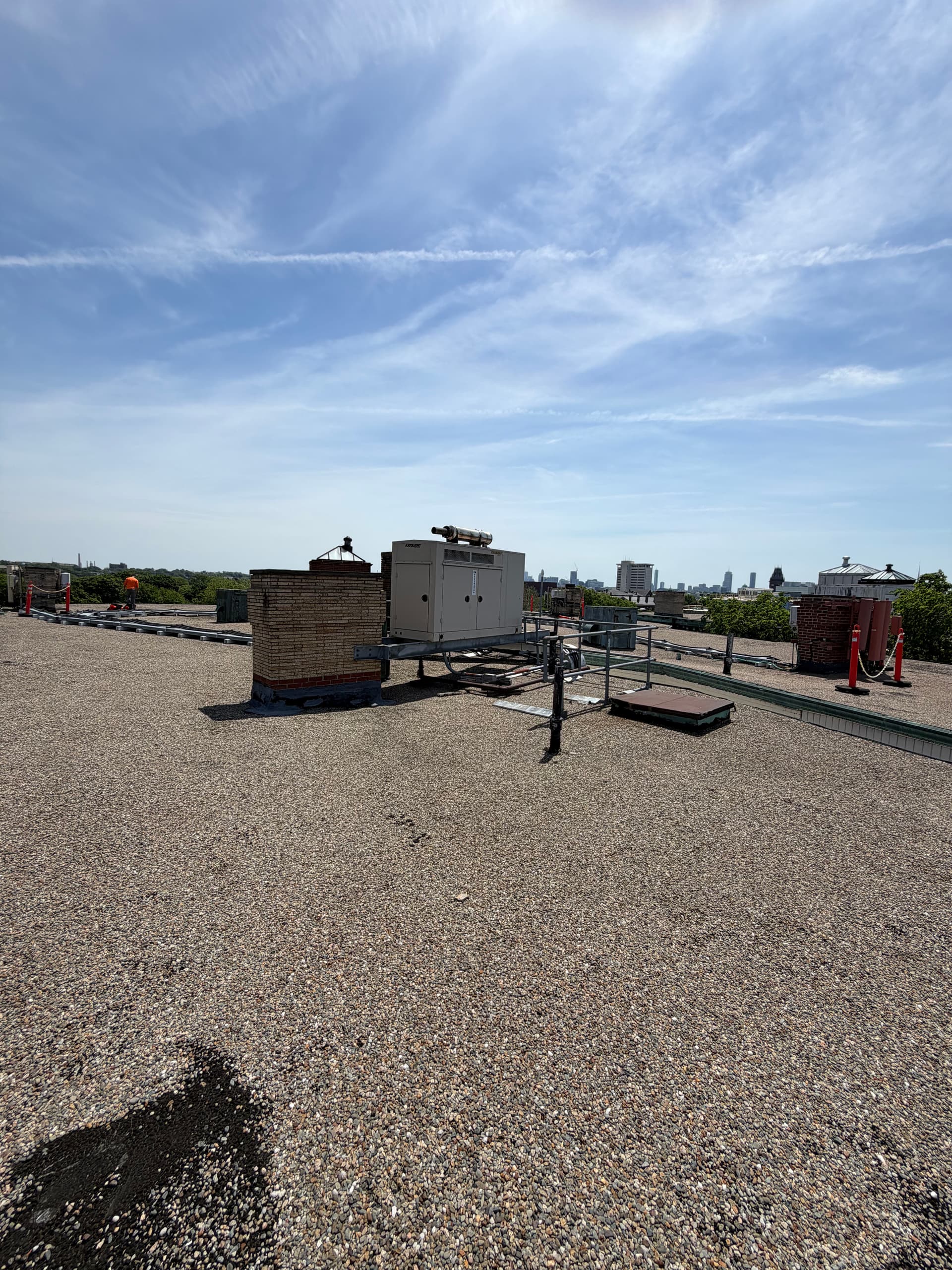
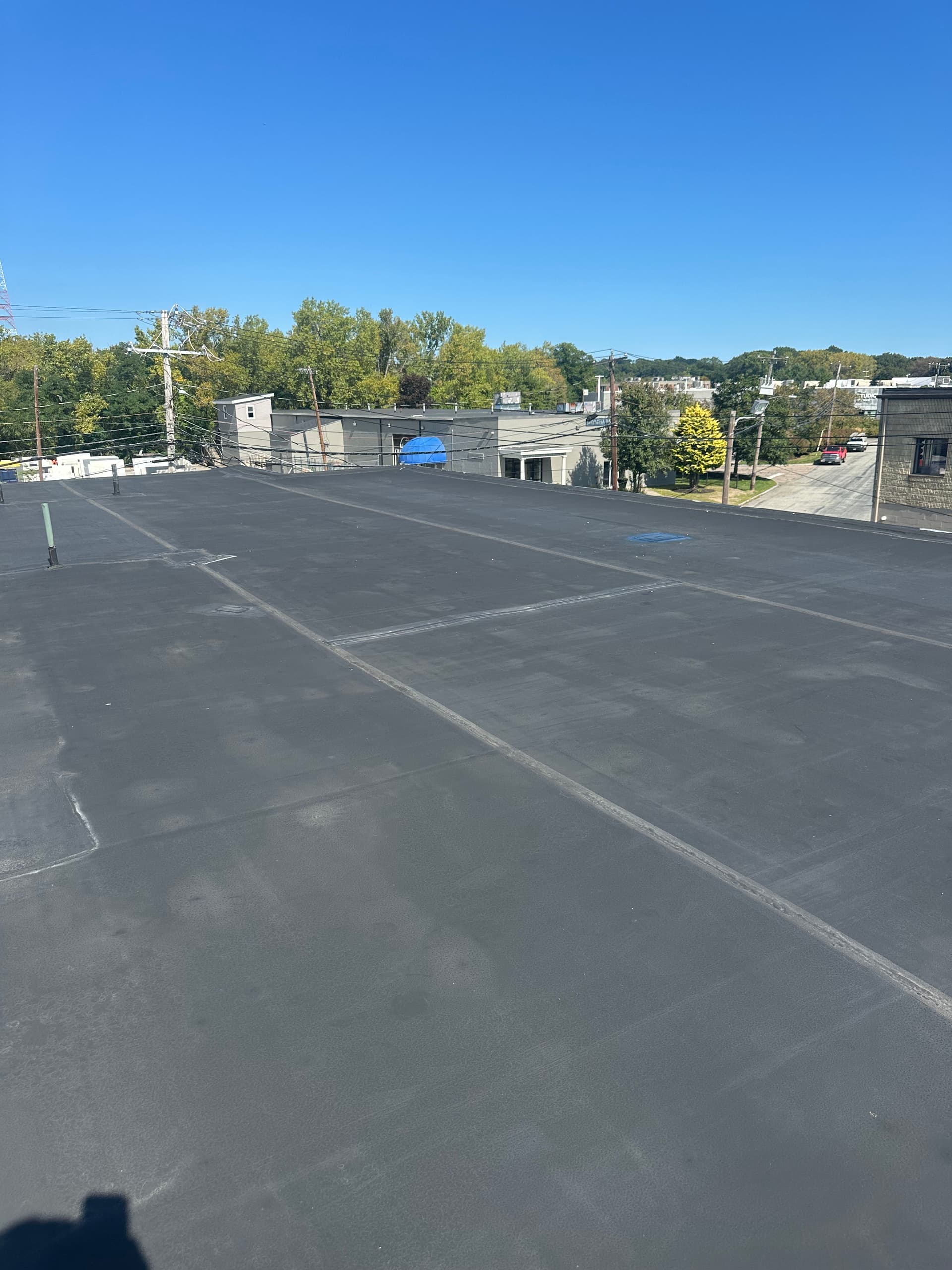
We work with property owners and facility managers across Massachusetts who are dealing with exactly this. Flat roofs, TPO membranes, modified bitumen, built-up gravel systems - we've seen the full range. And what we've learned is that the warning signs are almost always there before a roof fails. They just need someone to catch them.
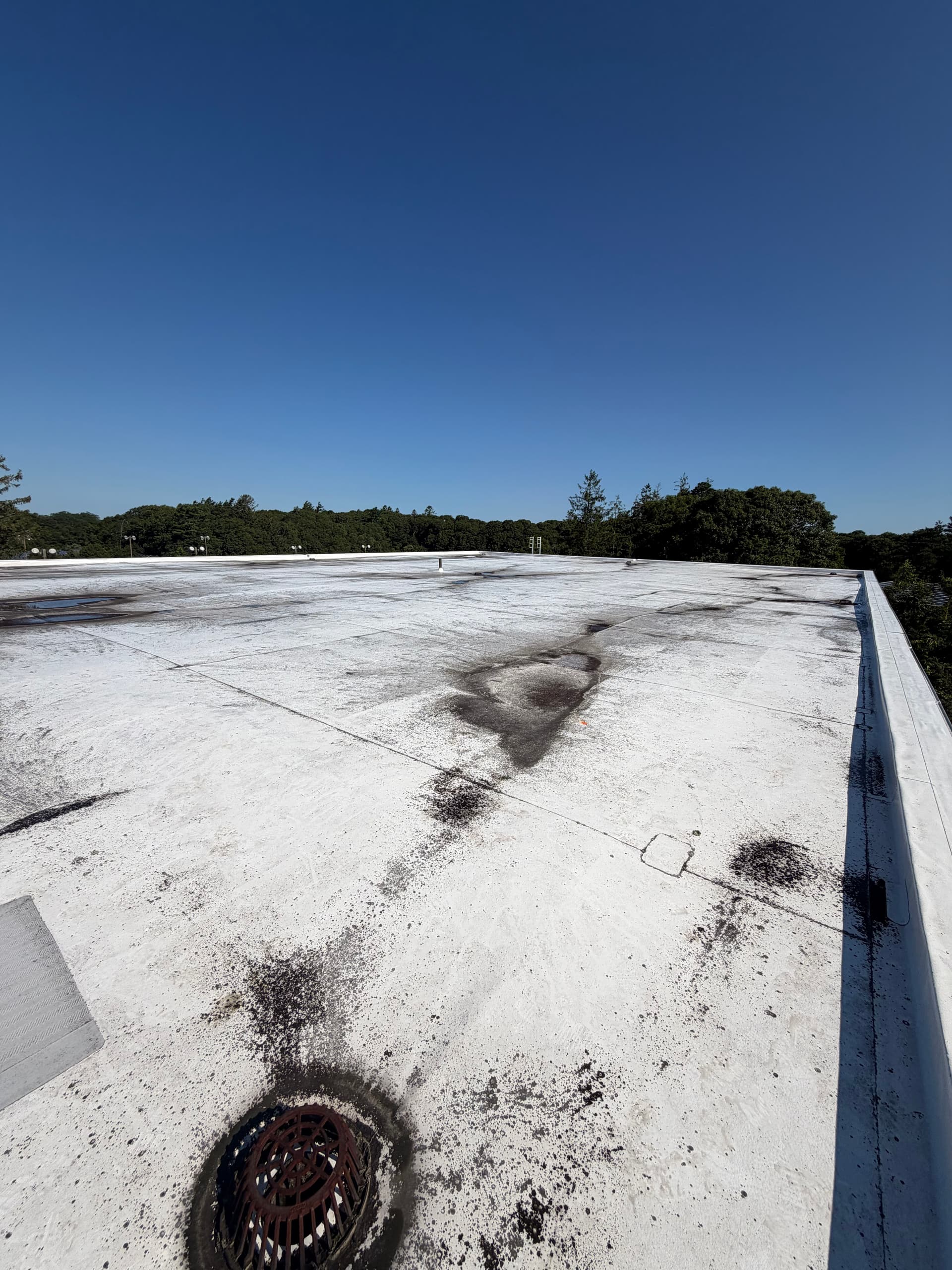
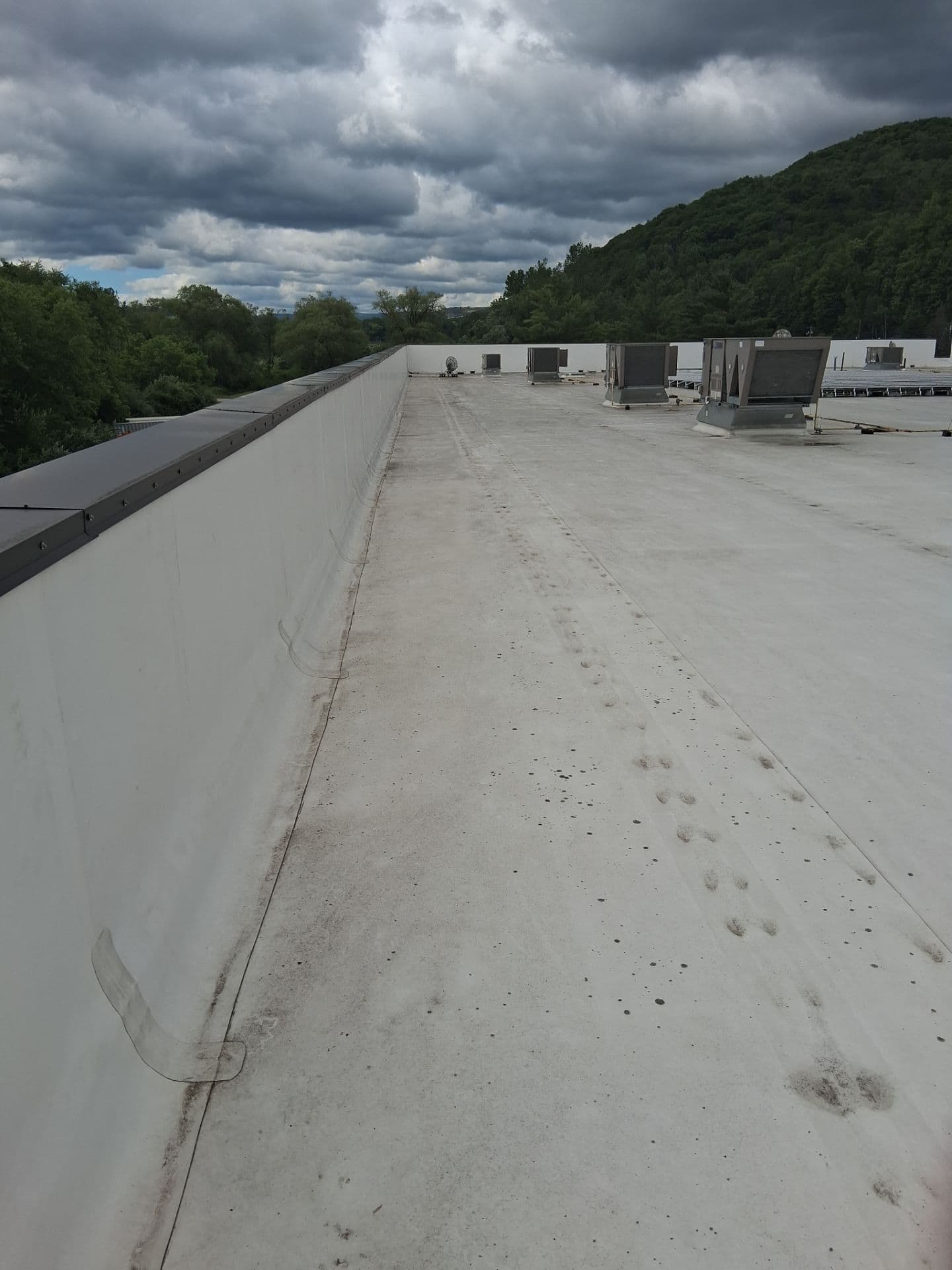
Ponding water is one of the biggest ones. When water sits on a flat commercial roof for more than 48 hours, it puts constant stress on the membrane and accelerates deterioration around seams and drains. Staining near drains, like the dark organic buildup you'll notice in some of our recent roof photos, is a sign drainage is compromised. That's not a cosmetic issue - it's a functional one.
Loose seams are another red flag. A seam that's starting to separate lets moisture work its way under the membrane, often without any visible interior signs until the damage is widespread. Same goes for surface cracking on older modified bitumen roofs. These aren't things you can see from the ground, which is why a proper inspection actually matters.
We help building owners get ahead of these issues before they become urgent. Whether your roof is five years old or fifteen, a routine assessment can tell you a lot about where things stand and what - if anything - needs attention now versus later. Protecting your property starts with knowing what you're working with.