Is Your Commercial Roof Ready for Storm Season in New England?
Most facility managers don't think about their roof until water is coming through the ceiling. By then, you're looking at emergency repair costs, potential interior damage, and a headache that could have been avoided with one scheduled walkthrough.
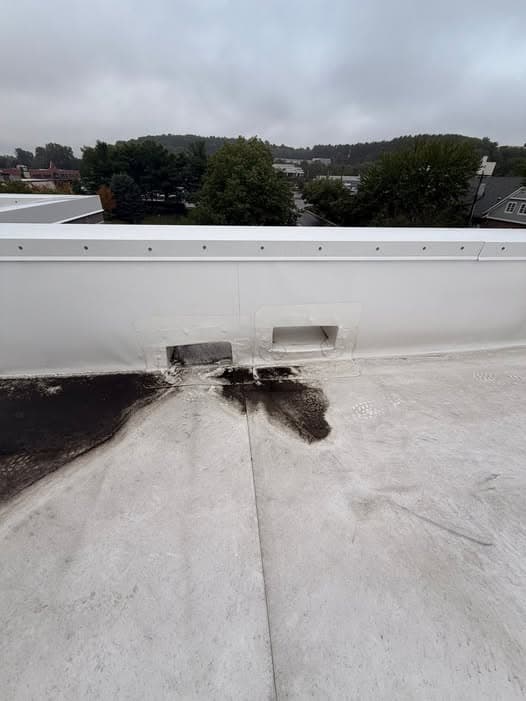
Here's what we find on a typical commercial roof inspection - clogged or failing drainage outlets, compromised membrane seams, deteriorating flashing, and rooftop equipment that hasn't been secured properly. Any one of those issues is manageable when caught early. Let a high-wind storm work on them first, and you're in a different situation entirely.
Drainage is one of the biggest culprits on flat and low-slope commercial roofs across New England. When scuppers or drains get blocked, water pools. Pooled water adds weight, works into seams, and accelerates membrane breakdown. It doesn't take much before a minor maintenance item becomes a structural concern.
We conduct storm-readiness inspections for commercial and industrial properties throughout New England. That means we're checking the full system - not just a quick visual from the hatch. Flashing integrity, membrane condition, seam adhesion, drainage flow, equipment anchoring. If something needs attention, we'll tell you exactly what it is and why it matters.
Storm season doesn't give you much notice. A proper inspection now means you're not scrambling for a contractor when the next system rolls through. We work with facilities managers and property owners who need reliable information and straight answers - not a sales pitch.